
Getting a good night’s sleep is essential for physical health, mental well-being, and everyday productivity. However, people experiencing insomnia may find it difficult to fall asleep, remain asleep, or wake up feeling refreshed. Eszopiclone is a prescription sleep medication used to help adults manage insomnia by making it easier to fall asleep and stay asleep.
One of the most common questions about this medication is, ‘How long does eszopiclone last?’
Understanding how long its effects remain active, how different strengths work, and what precautions are necessary can help people make informed decisions about their sleep treatment. This guide explores eszopiclone tablets, their duration, strengths, safety considerations, and how they compare with zopiclone.
1. What Is Eszopiclone?
Eszopiclone is a prescription medication belonging to a group of medicines known as sedative-hypnotics. It acts on gamma-aminobutyric acid (GABA) receptors in the brain, helping reduce certain types of brain activity associated with wakefulness.
It is prescribed to adults experiencing insomnia, particularly difficulties falling asleep or staying asleep throughout the night.
Eszopiclone tablets are available in different strengths, depending on the prescription and the patient’s individual circumstances.
The medication may help with:
- Reducing the time needed to fall asleep.
- Supporting longer periods of uninterrupted sleep.
- Reducing nighttime awakenings.
- Improving overall sleep duration.
- Managing short-term or persistent insomnia under medical supervision.
Eszopiclone should only be used according to a healthcare professional’s instructions.
2. How Long Does Eszopiclone Last?
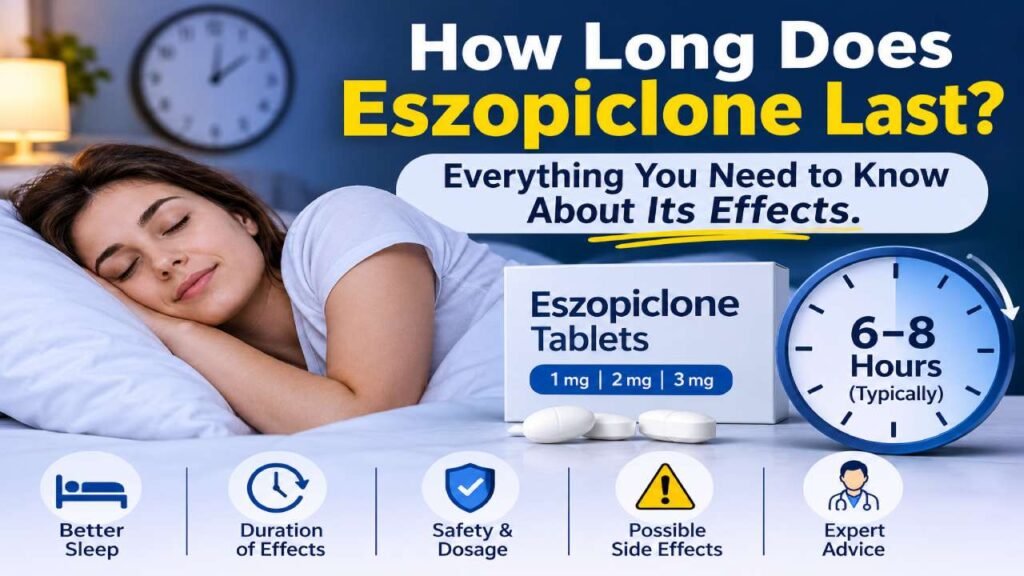
Eszopiclone generally has effects that can support sleep throughout the night. Its elimination half-life is approximately six hours in healthy adults, although this can vary depending on individual factors.
The half-life describes how long the body takes to eliminate approximately half of the medication. It does not mean that all its effects disappear after six hours.
For many adults, the medication’s sleep-related effects can extend through a typical night’s sleep. However, some people may experience next-day drowsiness, reduced alertness, dizziness, or difficulty concentrating.
Several factors can influence how long eszopiclone lasts:
- Age: Older adults may process medications differently.
- Liver function: Reduced liver function can affect medication clearance.
- Other medications: Certain medicines may increase sedation or change how eszopiclone is processed.
- Alcohol: Alcohol can intensify sedative effects and should be avoided.
- Individual response: People can respond differently to the same medication.
It is important to allow a full 7–8 hours for sleep after taking eszopiclone, as directed by the prescribing professional.
3. Understanding Different Eszopiclone Tablet Strengths
Eszopiclone is available in several strengths. The appropriate strength depends on a person’s medical history, age, response to treatment, and other medications.
Eszopiclone 1 mg
Eszopiclone 1 mg is the recommended starting dose for adults under US prescribing information.
It may be considered when:
- A person is beginning treatment for insomnia.
- A lower medication dose is appropriate.
- A healthcare professional wants to assess the individual’s response.
- There are concerns about next-day drowsiness.
The lowest effective dose is generally preferred to reduce the risk of unwanted effects.
Eszopiclone 2 mg
Eszopiclone 2 mg is another available strength that may be prescribed when a healthcare professional determines that a different dose is clinically appropriate.
A clinician may consider factors such as:
- Difficulty staying asleep.
- Response to an initial dose.
- Previous side effects.
- Other medications being taken.
- Overall health and liver function.
A higher strength does not automatically mean better sleep quality.
Eszopiclone 3 mg
Eszopiclone 3 mg is the highest recommended daily dose under standard US prescribing information for adults.
It may be considered when lower doses have not provided sufficient improvement and the prescriber determines that the benefits outweigh the risks.
However, higher doses can increase the possibility of next-day impairment, including reduced alertness and difficulty concentrating.
Important: These strengths are not instructions for self-adjusting medication. Never increase your dose or combine tablets without medical advice.
4. How Quickly Does Eszopiclone Start Working?
Eszopiclone is absorbed relatively quickly after oral administration. Peak blood concentrations are generally reached approximately one hour after taking it.
The time it takes to experience sleepiness can vary between individuals.
Factors that may influence how quickly it works include:
- Whether it is taken with or after food.
- Individual metabolism.
- Age and general health.
- Other medications.
- The severity of sleep difficulties.
A high-fat meal can delay absorption and reduce the medication’s effect on sleep onset.
For this reason, follow the instructions provided with your prescription rather than changing the timing yourself.
5. What Effects Can Eszopiclone Have?
Eszopiclone works by influencing brain activity associated with sleep and relaxation.
Its intended effects include:
Easier sleep initiation: It can reduce the time needed to fall asleep.
Improved sleep maintenance: It may help people who regularly wake up during the night.
Longer sleep duration: It can improve the amount of time spent sleeping.
Better sleep continuity: It may help reduce interruptions during the night.
However, individual results vary. Eszopiclone does not address every underlying cause of insomnia, such as anxiety, chronic pain, sleep apnoea, or poor sleep habits.
6. Eszopiclone Safety and Dosage: Important Precautions
Understanding eszopiclone safety and dosage is essential before starting treatment.
According to US prescribing information, the recommended initial adult dose is 1 mg immediately before bedtime. A prescriber may increase it when appropriate, up to a maximum of 3 mg daily.
The medication should only be taken when there are at least 7–8 hours available for sleep.
Important safety precautions include:
- Take the medication only as prescribed.
- Do not take an additional dose during the same night.
- Avoid alcohol because it can increase sedation.
- Do not combine it with other sleep medicines unless specifically directed.
- Tell your healthcare professional about all medicines and supplements you use.
- Do not drive or operate machinery if you feel sleepy or impaired.
- Discuss liver problems and other medical conditions before treatment.
Older adults and people with certain health conditions may require lower doses.
Possible Side Effects
Like other prescription sleep medicines, Eszopiclone can cause side effects.
Commonly reported effects include:
- Unpleasant or metallic taste.
- Dry mouth.
- Headache.
- Dizziness.
- Daytime sleepiness.
- Nausea.
- Reduced concentration.
Some effects may become less noticeable over time, but persistent or troublesome symptoms should be discussed with a healthcare professional.
Serious Safety Warnings
One particularly important warning involves complex sleep behaviours.
Some people taking eszopiclone have experienced activities such as sleepwalking, preparing food, making phone calls, or even driving while not fully awake.
These behaviours can occur without the person remembering them afterwards.
If a complex sleep behaviour occurs, stop taking the medication and seek immediate medical advice. Eszopiclone should not be used again following such an episode unless a qualified clinician advises otherwise.
Other concerns include:
- Allergic reactions.
- Unusual changes in behaviour.
- Worsening depression.
- Dependence and withdrawal symptoms.
- Excessive sedation when combined with other central nervous system depressants.
Seek urgent medical help for severe breathing difficulties, an overdose, or other serious reactions.
7. Eszopiclone vs Zopiclone: What Is the Difference?
Eszopiclone and Zopiclone are closely related prescription sleep medications. Both belong to the Z-drug family and influence GABA-related brain activity.
However, they are not identical medicines.
Diphenhydramin & Co. bei Schlafstörungen – PTAheute
| Feature | Eszopiclone | Zopiclone |
|---|---|---|
| Medication group | Z-drug | Z-drug |
| Main use | Insomnia | Insomnia |
| Chemical relationship | S-isomer of Zopiclone | Racemic mixture |
| Common strengths | 1 mg, 2 mg, 3 mg | 3.75 mg, 7.5 mg |
| Half-life | Approximately 6 hours | Approximately 3.5–6.5 hours |
| Prescription status | Prescription medicine | Prescription medicine |
Key Differences Explained
Chemical composition: Eszopiclone is the S-enantiomer of Zopiclone, while Zopiclone contains a mixture of two enantiomers.
Availability: Eszopiclone is used in countries such as the United States. Zopiclone is commonly prescribed in the UK for short-term insomnia treatment.
Dosage: Their strengths and dosing recommendations differ. They should never be converted or substituted on a milligram-for-milligram basis.
Side effects: Both medicines can cause dizziness, drowsiness, impaired coordination, and dependence. Individual experiences vary.
Which Is More Suitable?
There is no universal answer. The most appropriate treatment depends on the person’s symptoms, medical history, other medications, and local prescribing guidance.
A qualified healthcare professional can help determine whether either medicine is appropriate.
8. What Factors Can Affect How Long Eszopiclone Stays in Your Body?
Although the average elimination half-life is approximately six hours, several factors can influence how quickly the body processes the medication.
Age
Older adults may eliminate eszopiclone more slowly, potentially increasing exposure and next-day effects.
Liver Health
The liver plays an important role in processing Eszopiclone. People with impaired liver function may require additional precautions.
Other Medications
Certain medicines can affect the enzymes responsible for metabolising Eszopiclone. Some combinations may increase sedation.
Food Intake
Taking Eszopiclone after a heavy, high-fat meal may delay its absorption and slow its sleep-onset effects.
Individual Metabolism
Genetics, general health, and individual differences can influence how the body responds to medication.
9. Can Eszopiclone Cause Next-Day Drowsiness?
Yes. Although Eszopiclone is intended to support nighttime sleep, some people experience effects the following morning.
Possible symptoms include:
- Feeling sleepy after waking.
- Difficulty concentrating.
- Dizziness.
- Slower reaction times.
- Reduced coordination.
- A feeling of tiredness.
The risk of next-day impairment can increase with higher doses, insufficient sleep time, alcohol consumption, or other sedating medications.
If you experience these symptoms, avoid driving or activities requiring full alertness.
10. Tips for Supporting Better Sleep While Managing Insomnia
Medication is not the only part of managing sleep difficulties. Developing healthy sleeping habits can also make a meaningful difference.
Consider the following practices:
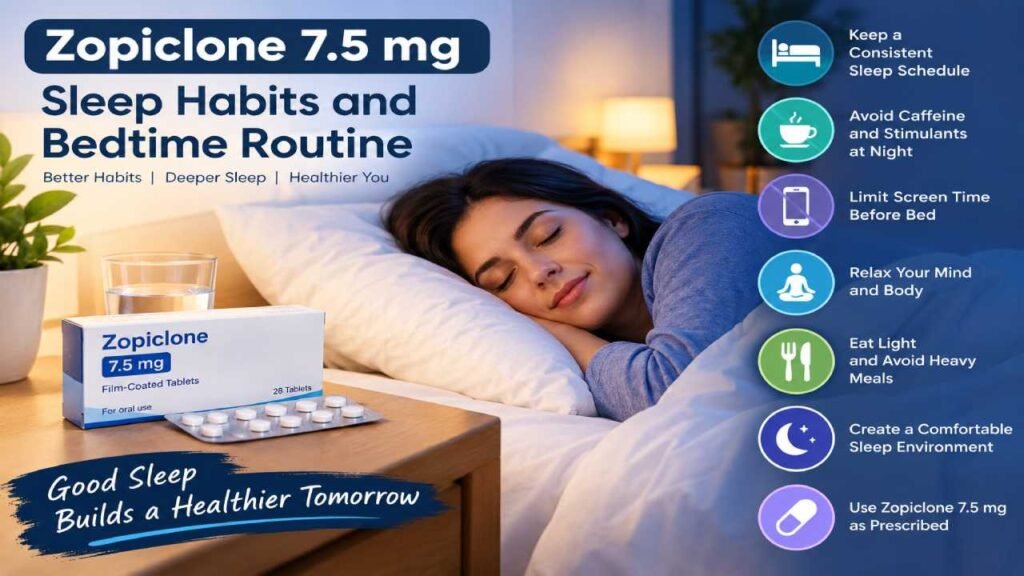
- Maintain a consistent bedtime: Try going to bed and waking up at similar times each day.
- Reduce screen exposure: Avoid excessive phone and computer use before bedtime.
- Create a comfortable bedroom: Keep your sleeping environment quiet, dark, and comfortable.
- Limit caffeine: Avoid coffee, energy drinks, and other caffeinated beverages close to bedtime.
- Exercise regularly: Physical activity can support healthier sleep patterns.
- Manage stress: Relaxation exercises, meditation, and breathing techniques may help.
- Avoid alcohol: Alcohol can disrupt sleep quality and interact dangerously with sleep medication.
Cognitive behavioural therapy for insomnia (CBT-I) is also an established treatment option that can help address persistent sleep difficulties.
11. When Should You Speak to a Healthcare Professional?
Occasional sleep difficulties are common, but persistent insomnia may require professional assessment.
Consider seeking medical advice if:
- You regularly struggle to fall asleep.
- You frequently wake up during the night.
- You feel exhausted during the daytime.
- Sleep problems interfere with work or daily activities.
- You experience unusual behaviour after taking sleep medication.
- Your current treatment does not appear to be helping.
A healthcare professional can investigate possible underlying causes and discuss appropriate treatment options.
12. Frequently Asked Questions About Eszopiclone
1. How long does Eszopiclone last?
Eszopiclone can support sleep throughout the night. Its average elimination half-life is approximately six hours, although its effects and clearance vary between individuals.
2. How quickly does Eszopiclone work?
Peak blood concentrations are generally reached approximately one hour after administration. The time needed to experience sleepiness varies.
3. Is Eszopiclone 1 mg suitable for beginners?
The US prescribing information recommends 1 mg as the initial adult dose. However, a healthcare professional must determine whether it is suitable for an individual.
4. What is the difference between Eszopiclone 2 mg and 3 mg?
They are different tablet strengths. The 3 mg strength provides a higher dose and may increase the risk of next-day impairment. The appropriate strength must be determined by a prescriber.
5. Can Eszopiclone be taken every night?
It may be prescribed for regular use in certain circumstances, but ongoing treatment requires medical supervision. Discuss duration, dependence risks, and alternative treatments with your healthcare professional.
6. Is Eszopiclone stronger than Zopiclone?
Neither medicine can be considered universally stronger based simply on its tablet strength. They have different formulations and dosing recommendations.
7. Can Eszopiclone cause dependence?
Yes. Repeated use can lead to physical or psychological dependence. Stopping after prolonged use may cause withdrawal symptoms or rebound insomnia. Seek medical advice before discontinuing regular treatment.
8. Can I drink alcohol while taking Eszopiclone?
No. Alcohol can intensify the sedative effects and increase the risk of dangerous reactions. Avoid alcohol while taking this medication.
13. Final Thoughts: Understanding Eszopiclone and Its Duration
Understanding how long Eszopiclone lasts can help people make informed decisions about insomnia treatment. With an average elimination half-life of approximately six hours, the medication can support sleep during the night, although some people may experience next-day effects.
Whether discussing Eszopiclone 1 mg, Eszopiclone 2 mg, or Eszopiclone 3 mg, safety should always remain the priority. The correct treatment depends on individual health needs, medical advice, and the response to prescribed medication.
When comparing Eszopiclone vs Zopiclone, remember that both are prescription sleep medicines with similar therapeutic purposes but different chemical compositions and dosing recommendations.
Alongside appropriate medical treatment, healthy sleep habits and professional guidance can help people manage insomnia more effectively.