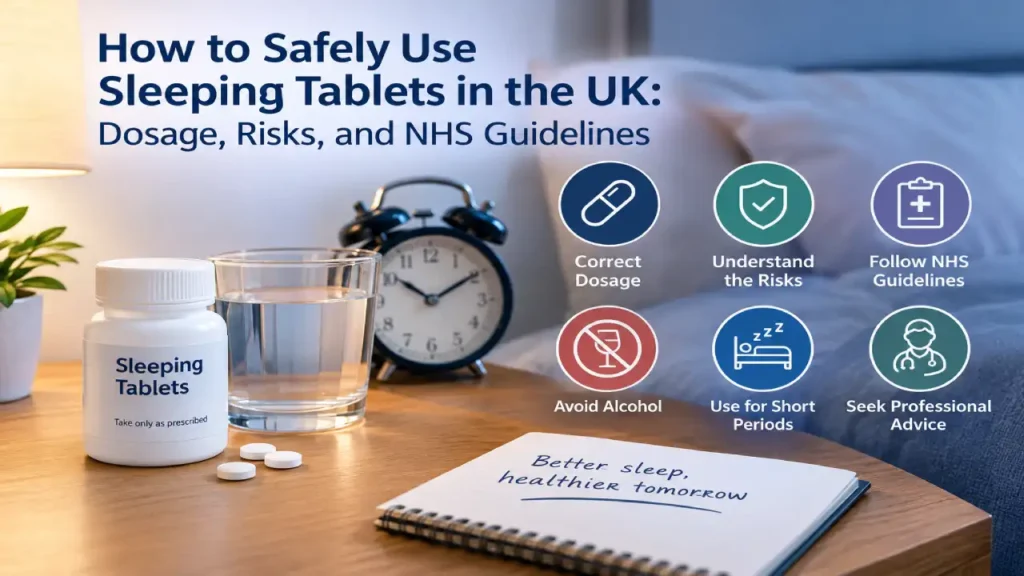

Difficulty sleeping can affect concentration, mood, energy, and everyday life. While changes to sleep habits and behavioral approaches are usually considered first, some people with severe or short-term insomnia may be prescribed sleeping medicines by a healthcare professional.
This guide explains how sleeping tablets UK patients may encounter are used safely, what to know about dosage, potential risks, dependence, interactions, and the guidance provided by the NHS and NICE.
Important: This article is for general information and does not replace advice from a GP, pharmacist or other qualified healthcare professional. Prescription sleeping medicines should only be taken when prescribed for you and exactly as directed.
What Are Sleeping Tablets?
Sleeping tablets, sometimes called hypnotics, are medicines used to help people with insomnia. They may help with problems such as difficulty falling asleep or waking repeatedly during the night.
However, sleeping medicines do not necessarily address the underlying reason for insomnia. The NHS explains that doctors generally try to identify the cause of ongoing sleep problems and may recommend approaches such as cognitive behavioral therapy for insomnia (CBT-I) and improvements to sleeping habits.
The NHS also notes that sleeping pills are now rarely prescribed for insomnia and, when used, are generally prescribed only for a short period when insomnia is severe and other approaches have not worked.
Sleeping Tablets UK: When Might They Be Prescribed?
Prescription sleeping medicines are generally considered when insomnia is severe and is having a significant effect on normal daily activities.
NICE guidance recommends considering non-drug measures first. When hypnotic treatment is considered appropriate, it should be prescribed for a short period and according to the medicine’s licensed indications.
A healthcare professional may first ask about:
- How long you have experienced sleep problems
- Your usual sleep pattern
- Stress, anxiety, or other factors affecting sleep
- Other medicines you take
- Alcohol or recreational drug use
- Existing medical conditions
- Symptoms of other sleep disorders
- Whether changes to your sleep routine have helped
This assessment helps determine whether medication is appropriate or whether another form of treatment would be more suitable.
Zopiclone and Other Z-Drugs
Zopiclone is one of the medicines sometimes prescribed for short-term insomnia. It belongs to a group commonly known as Z-drugs.
According to the NHS, zopiclone is available only with a prescription and is normally used for a short period. It is usually taken once before bedtime and begins working in approximately 30 to 60 minutes.
NICE states that there is no compelling evidence to distinguish between zopiclone, zolpidem, and certain shorter-acting benzodiazepine hypnotics for insomnia. The guidance therefore emphasizes appropriate prescribing rather than routinely choosing one medicine over another.
Understanding Zopiclone Dosage
The correct dose depends on the individual and should be determined by the prescriber.
For this reason, people should not change their zopiclone dose themselves or take an additional tablet because they feel the first dose has not worked quickly enough.
UK prescribing information commonly uses lower doses for some people, including older adults and people with certain liver or kidney problems. Local NHS formularies may specify a maximum adult dose of 7.5 mg at night, but the appropriate dose for an individual patient must come from their prescriber.
The NHS advises taking zopiclone exactly as prescribed and never taking more than one dose during the same night. If a dose is missed, patients should not take two doses to compensate.
Why You Should Not Increase the Dose Yourself
Increasing a sleeping medicine without medical advice can increase the risk of:
- Excessive sedation
- Dizziness
- Confusion
- Reduced alertness
- Accidents and falls
- Breathing problems
- Dependence
- Overdose
If your prescribed medicine does not seem to be working, speak with a doctor or pharmacist rather than increasing the dose.
How Long Should Zopiclone Be Used?
Zopiclone is intended for short-term treatment. The NHS states that it is usually prescribed for a few days to a few weeks and is generally not prescribed for longer than four weeks because tolerance can develop.
NICE guidance similarly recommends that hypnotics such as zopiclone should be prescribed for short periods only and in accordance with their licensed indications.
Longer use can increase the possibility of tolerance and dependence. This is one reason patients should have their treatment reviewed rather than continuing the medicine indefinitely.
Zopiclone Dependence and Withdrawal
Some sleeping medicines can cause physical or psychological dependence.
The NHS specifically warns that people can become addicted to zopiclone. Stopping it suddenly after regular use can cause withdrawal symptoms, which is why a doctor may gradually reduce the dose when treatment needs to end.
Possible withdrawal or rebound symptoms can include:
- Anxiety
- Restlessness
- Difficulty sleeping
- Irritability
- Other symptoms depending on the individual
If you have been taking zopiclone regularly, do not suddenly stop without discussing it with your healthcare professional.
Risks and Side Effects
Like all medicines, sleeping tablets can cause side effects.
Common effects associated with zopiclone include:
- Sleepiness or tiredness
- Reduced alertness
- Dizziness or feeling dazed
- Dry mouth
- A bitter or metallic taste
The NHS advises that people taking zopiclone should not drive, cycle, or operate machinery for 12 hours after taking it and should wait longer if they still feel sleepy, dizzy, or less alert.
More serious reactions can occur rarely. These can include breathing difficulties, allergic reactions, and unusual behaviors while not fully awake, such as sleepwalking or carrying out activities without remembering them afterwards. Seek urgent medical advice if serious symptoms occur.
Do Not Mix Sleeping Tablets With Alcohol
Alcohol can make the sedative effects of medicines such as zopiclone considerably stronger.
The NHS specifically advises people taking zopiclone not to drink alcohol because the combination can increase the risk of serious sedation, breathing problems and difficulty waking.
It is also important to tell your doctor or pharmacist about other medicines you are taking. Some medicines can increase drowsiness or interact with zopiclone, including certain opioid painkillers, sedating antihistamines, medicines for anxiety or sleep, some antidepressants, and other medicines.
What About Zopisleep Tablets?
The name Zopisleep tablets may be encountered in online searches or product listings, but a brand name alone does not establish whether a medicine is appropriate, genuine, licensed, or suitable for an individual.
Before taking any product marketed as a sleeping tablet:
- Check the active ingredient.
- Check the strength.
- Confirm that it has been prescribed or recommended appropriately.
- Read the patient information leaflet.
- Ask a pharmacist if you are uncertain.
- Do not combine it with another sedating medicine unless a healthcare professional has advised you to do so.
Never assume that two products are safe to combine simply because they have different brand names.
Be Careful With Searches Such as “Buy Zopiclone Online”
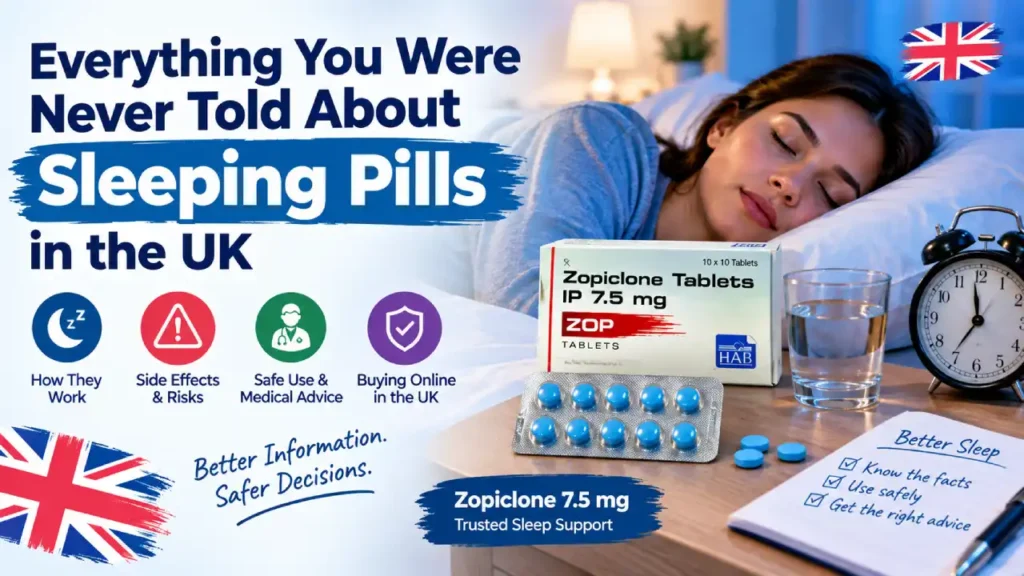
People searching for “buy zopiclone online” or “zopiclone online UK” may encounter websites offering prescription medicines without an appropriate clinical assessment.
This is an important safety concern. Zopiclone is a prescription-only medicine in the UK. The NHS recommends obtaining it through appropriate healthcare channels and taking it only as prescribed.
An online listing does not by itself prove that a medicine is genuine, correctly stored, appropriately supplied, or suitable for you. Avoid taking medicines obtained from an unverified source.
If you are considering treatment for insomnia, speak with a GP, pharmacist, or another qualified healthcare professional about your symptoms and treatment options.
What Does the NHS Recommend for Insomnia?
Medication is only one possible part of insomnia management. The NHS recommends improving sleep habits and addressing factors that may be contributing to poor sleep.
Useful measures include:
- Going to bed and getting up at similar times each day
- Relaxing before bedtime
- Keeping the bedroom dark and quiet
- Exercising regularly during the day
- Avoiding caffeine and other stimulants close to bedtime
- Avoiding large meals late at night
- Avoiding daytime naps
- Limiting activities that keep you mentally alert immediately before bed
- Avoiding driving when you feel sleepy
The NHS also says that CBT may be offered for persistent insomnia.
When Should You Speak to a GP?
Consider speaking with a GP if:
- Your sleep problems have continued for months.
- Changes to your sleeping habits have not helped.
- Insomnia is affecting your daily life.
- You regularly need medication to sleep.
- You are worried about dependence.
- You experience significant daytime sleepiness.
- You suspect another condition may be affecting your sleep.
Persistent insomnia can sometimes be associated with other problems, including sleep apnea, anxiety, depression, or other medical conditions. Finding the underlying cause can be more useful than simply treating the symptom.
What If You Take Too Much Zopiclone?
Taking more zopiclone than prescribed can be dangerous.
The NHS advises contacting NHS 111 if you have taken more than your prescribed dose. If you are advised to attend an emergency department, do not drive yourself. Take the medicine packaging and information about any other medicines you use.
If someone has severe breathing difficulties, is extremely difficult to wake or appears to be experiencing a medical emergency, seek emergency medical assistance immediately.
Safe Use Checklist
Before taking a prescription sleeping tablet, remember:
1. Follow the prescribed dose.
Never increase the amount yourself.
2. Take it only as directed.
Do not take another dose during the same night unless specifically instructed by a healthcare professional.
3. Avoid alcohol.
Alcohol can increase sedation and breathing-related risks.
4. Check other medicines.
Tell your doctor or pharmacist about prescription medicines, over-the-counter products, supplements and herbal remedies.
5. Be cautious about driving.
Sedation can continue into the following day.
6. Do not stop regular treatment suddenly.
Ask your healthcare professional whether a gradual reduction is necessary.
7. Use sleeping medicines only for the recommended period.
Longer use can increase tolerance and dependence.
8. Use reliable healthcare services.
Do not rely on an online product listing as proof that a medicine is appropriate or genuine.
Final Thoughts
Understanding sleeping tablets UK patients may be prescribed is important for making informed decisions about insomnia treatment. Medicines such as zopiclone can have a role in short-term management of severe insomnia, but they are not suitable for everyone and should be used under professional supervision.
NHS and NICE guidance emphasise short-term use, appropriate prescribing, consideration of non-drug approaches and awareness of dependence and side effects.
If you are researching zopiclone online UK, Zopisleep tablets, or other sleeping medicines, focus on reliable medical information and speak with a qualified healthcare professional before starting, changing or stopping treatment.