
Choosing the right approach to better sleep can be challenging, especially when insomnia affects your daily routine, concentration, mood, and overall well-being. Many people in the UK look for effective ways to improve their sleep, from over-the-counter sleeping aids and natural remedies to prescription treatments.
Understanding the differences between these options is important before choosing a solution. Some products may help with occasional sleep difficulties, while others require medical assessment and professional supervision.
This guide explores the Best Sleeping Pills in the UK, compares over-the-counter and natural sleep solutions, explains prescription treatments such as zopiclone, and shares practical advice for developing healthier sleeping habits.
1. Understanding Sleeping Pills in the UK
Sleeping pills are products or medicines designed to help people who experience difficulty falling asleep, staying asleep, or maintaining a regular sleeping pattern.
However, not every sleep problem requires medication. Insomnia can be associated with stress, anxiety, irregular working hours, caffeine consumption, lifestyle habits, medical conditions, or other sleep disorders.
Before choosing a sleeping aid, consider:
- How long you have been experiencing sleep difficulties.
- Whether you struggle to fall asleep or wake up repeatedly.
- Whether stress or anxiety affects your bedtime routine.
- Whether other medicines may be contributing to sleep problems.
- Whether your symptoms affect your daytime activities.
Identifying the underlying cause can help you choose a more appropriate treatment.
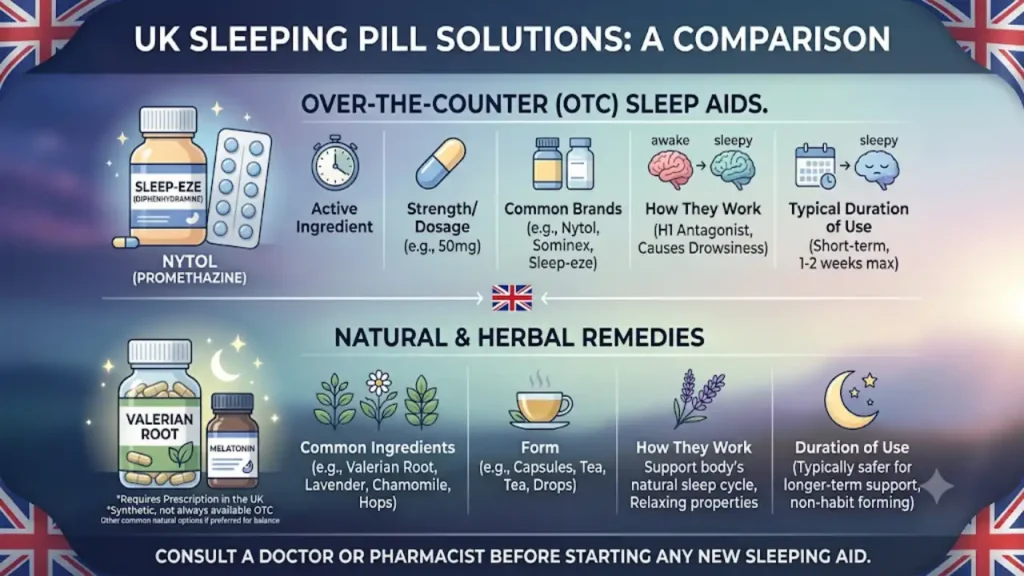
2. Over-the-Counter Sleeping Pills in the UK
Some pharmacies offer short-term sleeping aids without a prescription. These products may help with occasional sleeping difficulties, but they are not intended to treat the underlying causes of persistent insomnia.
Antihistamine-Based Sleeping Aids
Certain pharmacy sleeping aids contain sedating antihistamines. These medicines can cause drowsiness and may temporarily help people who experience occasional difficulty sleeping.
Potential disadvantages include the following:
- Morning drowsiness.
- Dry mouth.
- Dizziness.
- Reduced concentration.
- Possible interactions with other medicines.
They are not suitable for everyone, particularly older adults and people with certain medical conditions. Ask a pharmacist whether a particular product is appropriate.
Pharmacy Sleep Remedies
Some non-prescription products are marketed specifically for occasional sleep problems. Their ingredients and effects can vary.
Always check the product label and follow professional advice. Avoid combining different sleep aids or taking them alongside alcohol.
3. Natural Sleeping Solutions: Are They Effective?
Natural sleep solutions are popular among people who prefer to start with lifestyle changes and non-prescription approaches.
Although natural products are not automatically safe or effective, certain approaches may support healthier sleep habits.
Valerian
Valerian is a herbal ingredient commonly included in products marketed for relaxation and sleep.
Some people use it as part of their bedtime routine. However, evidence supporting its effectiveness for insomnia is limited.
It can also interact with medicines and other substances that cause drowsiness.
Lavender
Lavender is commonly used in aromatherapy and relaxation products.
Its fragrance may help create a calming bedroom environment, although it should not be considered a proven treatment for persistent insomnia.
Chamomile Tea
Chamomile tea is a popular caffeine-free bedtime drink.
Having a warm drink before bed can become part of a relaxing evening routine. However, chamomile itself has not been established as a reliable treatment for chronic insomnia.
People with allergies to plants in the daisy family should take particular care.
Relaxation and Meditation
Relaxation techniques can help people manage bedtime stress and racing thoughts.
Useful approaches include:
- Deep breathing exercises.
- Guided meditation.
- Gentle stretching.
- Reading before bedtime.
- Listening to calming sounds.
These habits can support a consistent sleep routine without relying on sleeping medication.
4. Prescription Sleeping Pills in the UK
When insomnia becomes severe and starts affecting everyday life, a healthcare professional may consider prescription treatment.
Prescription sleeping medicines are different from ordinary pharmacy sleep aids. They require an assessment of the patient’s symptoms, medical history, current medicines, and potential risks.
Zopiclone
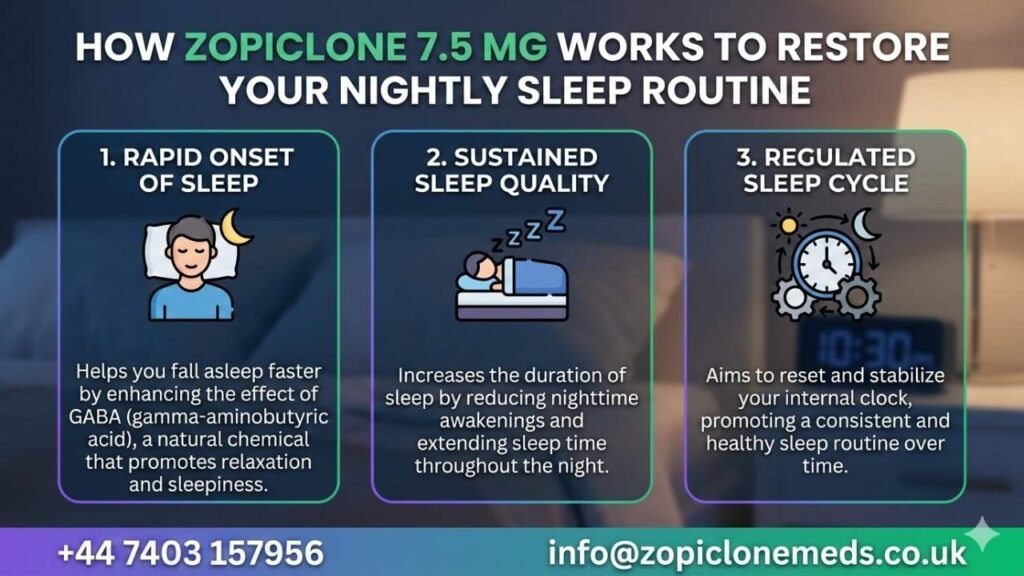
Zopiclone is a prescription-only sleeping medicine used for short-term treatment of insomnia in adults.
It belongs to a group of medicines commonly called Z-drugs. It may be prescribed when someone experiences significant difficulty falling asleep, waking during the night, or waking too early.
Important safety considerations include:
- It should only be taken when prescribed by a qualified healthcare professional.
- Treatment is generally limited to a short period.
- It can cause next-day drowsiness and impaired concentration.
- Dependence, tolerance, and withdrawal symptoms are possible.
- Alcohol should be avoided while taking it.
The NHS explains that zopiclone is usually prescribed for a few days to a few weeks and generally not for longer than four weeks.
People searching online for “buy zopiclone online in the UK,” “buy zopiclone online,” or “sleeping pills UK Zopiclone” should understand that zopiclone is prescription-only in the UK. These search phrases do not replace a medical assessment or a valid prescription. Medicines should only be obtained through legitimate, regulated pharmacy services.
Zolpidem
Zolpidem is another prescription-only medicine used for short-term insomnia treatment.
Like zopiclone, it belongs to the Z-drug group and affects brain activity associated with sleep.
It may cause dizziness, drowsiness, memory problems, and dependence. A healthcare professional must determine whether it is appropriate.
Melatonin
Melatonin is a hormone that helps regulate the body’s sleep-wake cycle.
In the UK, melatonin is prescription-only. It may be prescribed for particular sleep problems, including certain cases involving older adults or specific sleep-wake disorders.
It is not a general-purpose sleeping pill and is not suitable for everyone.
5. Comparing the Best Sleeping Pills and Natural Solutions
The most suitable approach depends on the type of sleep problem, its duration, and individual health circumstances.
| Sleep solution | Availability in the UK | Main consideration |
|---|---|---|
| Antihistamine sleep aids | Some are available from pharmacies. | Short-term use only |
| Valerian | Herbal products available | Limited evidence |
| Lavender | Various non-medicine products | May support relaxation. |
| Chamomile tea | Widely available | Relaxation routine |
| Melatonin | Prescription-only | Used for specific sleep problems |
| Zopiclone | Prescription-only | Short-term treatment |
| Zolpidem | Prescription-only | Short-term treatment |
There is no single product that qualifies as the best sleeping pill for everyone.
Natural approaches may be suitable starting points for some people, while persistent or severe insomnia requires professional assessment.
6. How to Improve Sleep Without Medication
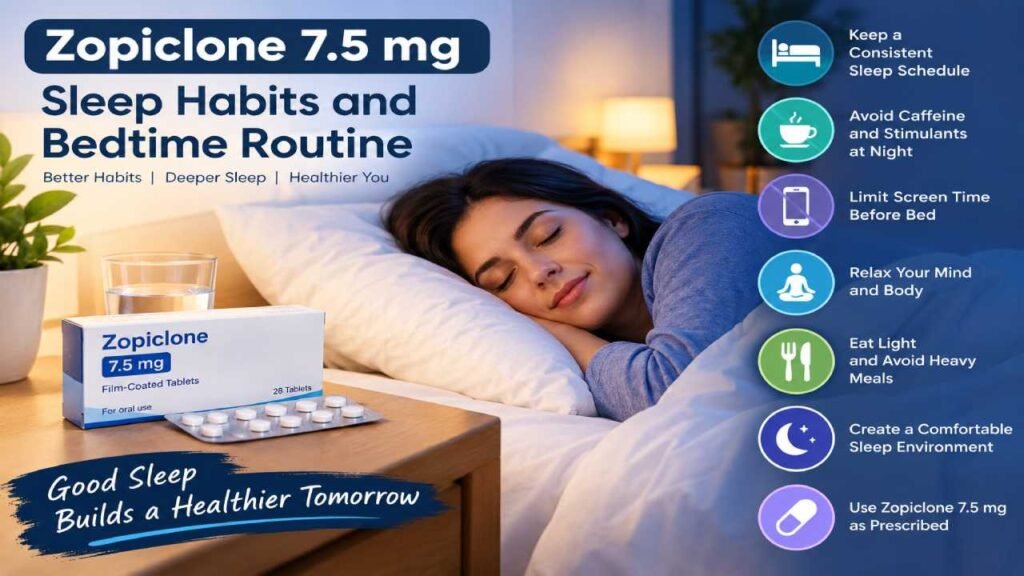
Improving sleep habits can make a meaningful difference, particularly when irregular routines or environmental factors contribute to insomnia.
Consider the following practical steps.
Maintain a Consistent Sleep Schedule
Try to go to bed and wake up at approximately the same time every day, including weekends.
A regular schedule helps reinforce your body’s natural sleep-wake rhythm.
Reduce Caffeine Consumption
Coffee, tea, energy drinks, and other caffeinated products can interfere with sleep.
Avoid caffeine for at least six hours before bedtime, or longer if you are particularly sensitive to it.
Create a Comfortable Bedroom
Your bedroom should be dark, quiet, and comfortable.
Consider blackout curtains, comfortable bedding, and reducing unnecessary noise.
Limit Screen Time
Using smartphones, computers, and televisions immediately before bedtime may make it harder to relax.
Try replacing evening screen time with reading, gentle stretching, or another calming activity.
Exercise Regularly
Regular physical activity can support general health and sleep quality.
However, avoid intense exercise close to bedtime if it makes you feel more alert.
Avoid Alcohol as a Sleep Aid
Alcohol may initially make someone feel sleepy, but it can disrupt normal sleep patterns and reduce sleep quality.
Avoid using alcohol to manage insomnia, particularly alongside sleeping medicines.
7. Understanding the Risks of Sleeping Pills
Sleeping medicines can provide benefits in carefully selected circumstances, but they also carry potential risks.
Common concerns include:
Daytime sleepiness: Some medicines can affect alertness the following morning.
Tolerance: The body may become less responsive to certain sleeping medicines over time.
Dependence: Some prescription sleeping medicines can cause physical or psychological dependence.
Drug interactions: Combining sleeping medicines with alcohol, opioids, or other sedating substances can be dangerous.
Withdrawal symptoms: Suddenly stopping certain medicines after prolonged use can cause withdrawal symptoms or rebound insomnia.
Never increase a prescribed dose, combine sleeping medicines, or change your treatment without speaking to your healthcare professional.
8. When Should You Speak to a Doctor?
Occasional sleepless nights are common. However, persistent insomnia deserves attention.
Speak to your GP if:
- You have experienced sleeping difficulties for several months.
- Your sleep problems affect your work or daily activities.
- You regularly wake up feeling exhausted.
- You experience significant anxiety associated with bedtime.
- Lifestyle changes have not improved your sleep.
- You suspect you have another sleep disorder, such as sleep apnoea.
Your GP may investigate underlying causes and recommend cognitive behavioural therapy for insomnia (CBT-I), lifestyle changes, or appropriate medical treatment.
9. Choosing the Right Sleeping Solution
Choosing among the Best Sleeping Pills and natural sleep solutions requires more than comparing product names or advertised benefits.
For occasional sleep difficulties, improving bedtime habits and speaking with a pharmacist about suitable pharmacy products may be reasonable first steps.
For ongoing insomnia, professional guidance is more important than experimenting with different sleeping medicines.
Prescription treatments such as zopiclone and zolpidem should only be considered following an appropriate medical assessment. They are not intended to replace long-term sleep management strategies.
A balanced approach that combines healthy sleep habits, professional advice, and carefully selected treatment can help support better sleep over time.
10. Final Thoughts
Finding the right solution for insomnia can take time. Over-the-counter sleeping aids, natural relaxation methods, and prescription medicines all have different purposes, benefits, and limitations.
The Best Sleeping Pills are not necessarily the strongest products. The most appropriate option is one that addresses the individual’s sleep difficulties while considering their medical history and safety.
Start by understanding what may be affecting your sleep, establish a consistent bedtime routine, and seek professional advice if insomnia continues.
Better sleep is not only about falling asleep faster. It is also about developing healthy habits that support long-term wellbeing.
Frequently Asked Questions (FAQs)
1. What are the Best Sleeping Pills in the UK?
There is no universally best sleeping pill. Pharmacy sleep aids, prescription medicines, and natural approaches have different uses. The appropriate option depends on individual circumstances and professional advice.
2. Can I buy sleeping pills over the counter in the UK?
Some pharmacy sleeping aids are available without a prescription. However, prescription medicines such as zopiclone and zolpidem cannot legally be purchased as ordinary over-the-counter medicines.
3. Is zopiclone available without a prescription?
No. Zopiclone is a prescription-only medicine in the UK. It should only be used under the supervision of an appropriate healthcare professional.
4. Are natural sleeping remedies better than sleeping pills?
Not necessarily. Natural remedies may support relaxation, but their effectiveness varies and some can interact with medicines. Neither natural nor pharmaceutical products are automatically suitable for everyone.
5. Can I use sleeping pills every night?
Some sleeping medicines are intended only for short-term use. Regular use can increase the risk of tolerance and dependence. Follow the treatment plan provided by your prescriber.
6. What is CBT-I?
Cognitive behavioural therapy for insomnia is a structured treatment that helps people change thoughts and behaviours that contribute to sleep difficulties. It is an important treatment option for persistent insomnia.
Also read: Beyond the Pill: Combining Zopiclone 7.5 mg with Healthy Sleep Habits.