
Sleep is one of the most important parts of a healthy life, yet millions of people struggle to fall asleep or stay asleep during the night. You may go to bed feeling tired, only to find yourself staring at the ceiling for hours. Others wake up repeatedly throughout the night and never feel fully rested in the morning.
If you’re wondering why you can’t sleep during the night, the answer is often linked to stress, lifestyle habits, health conditions, or poor sleep routines. The good news is that many sleep problems can improve with simple changes and the right support.
In this guide, we’ll explain the most common causes of nighttime sleeplessness and the easy fixes that may help you sleep better naturally.
What Happens When You Can’t Sleep?
Difficulty sleeping is commonly known as insomnia. It can include:
- Trouble falling asleep
- Waking up multiple times during the night
- Waking too early
- Feeling tired even after sleeping
- Restless or light sleep
Occasional sleepless nights are normal, but ongoing sleep problems can affect your mood, concentration, energy levels, and overall health.
Common Reasons You Can’t Sleep at Night
1. Stress and Anxiety
Stress is one of the biggest causes of insomnia. When your mind stays active at night, it becomes difficult for your body to relax.
Common stress triggers include:
- Work pressure
- Financial worries
- Relationship problems
- Health concerns
- Overthinking
An anxious mind can keep your brain alert even when your body feels exhausted.
Easy Fix
- Avoid screens before bedtime
- Try deep breathing exercises
- Write down worries in a journal
- Practise meditation or calming music
Creating a relaxing bedtime routine helps signal your brain that it’s time to sleep.
2. Too Much Screen Time
Phones, laptops, and TVs emit blue light that interferes with melatonin production. Melatonin is the hormone responsible for regulating sleep.
Scrolling social media or watching videos late at night can make your brain stay awake longer.
Easy Fix
- Stop using screens 1 hour before bed
- Use night mode on devices
- Read a physical book instead
- Keep phones away from the bed
Reducing screen exposure before sleep can improve sleep quality naturally.
3. Caffeine Late in the Day
Coffee, tea, energy drinks, and some soft drinks contain caffeine, which stimulates the nervous system.
Even if you feel tired, caffeine can stay in your body for several hours and delay sleep.
Easy Fix
- Avoid caffeine after 2 PM
- Choose herbal tea in the evening
- Drink more water during the day
Small changes in caffeine intake often make a noticeable difference.
4. Irregular Sleep Schedule
Sleeping at different times every night confuses your body clock.
Staying awake late on weekends and waking early during weekdays can disrupt your natural sleep rhythm.
Easy Fix
- Go to bed at the same time daily
- Wake up consistently each morning
- Avoid long daytime naps
A stable sleep schedule helps train your body for better rest.
5. Poor Sleep Environment
Your bedroom environment affects how well you sleep.
Common sleep disruptors include:
- Bright lights
- Noise
- Uncomfortable mattress
- High room temperature
Easy Fix
- Keep your room cool and dark
- Use blackout curtains
- Reduce noise with earplugs or white noise
- Upgrade uncomfortable bedding if needed
Your bedroom should feel calm, quiet, and relaxing.
6. Eating Heavy Meals Before Bed
Large meals late at night can cause discomfort, acid reflux, or bloating, making sleep difficult.
Sugary snacks may also increase energy levels before bedtime.
Easy Fix
- Avoid heavy meals within 2–3 hours of sleep
- Choose lighter evening snacks
- Limit sugary foods late at night
Good digestion supports better nighttime rest.
7. Medical Conditions
Some health conditions can interfere with sleep, including:
- Chronic pain
- Sleep apnea
- Depression
- Anxiety disorders
- Hormonal changes
If sleep problems continue for weeks, it may be important to speak with a healthcare professional.
When People Consider Sleep Medication
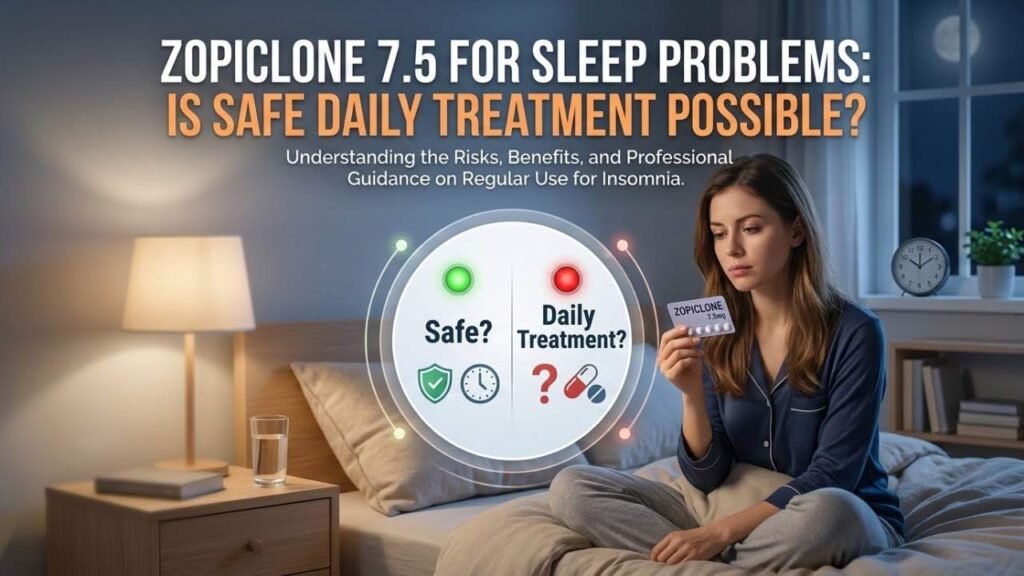
For short-term insomnia, doctors sometimes prescribe medications such as Zopiclone to help improve sleep.
Products commonly searched online include:
These medications are generally intended for temporary use and should only be taken responsibly under professional guidance. Overuse or incorrect use may increase the risk of dependence, daytime drowsiness, and reduced sleep quality over time.
Natural Ways to Sleep Better
Create a Night Routine
Your brain responds well to routine. Try repeating calming habits every evening, such as:
- Warm shower
- Herbal tea
- Reading
- Relaxation exercises
Consistency helps your body prepare for sleep naturally.
Exercise During the Day
Regular movement improves sleep quality and reduces stress.
Even light activity like walking can help.
Best Options
- Walking
- Yoga
- Stretching
- Cycling
Avoid intense workouts immediately before bed.
Reduce Alcohol and Nicotine
Many people believe alcohol helps sleep, but it actually disrupts deep sleep later in the night.
Nicotine also acts as a stimulant and may keep you awake.
Try Relaxation Techniques
Relaxation methods can calm the nervous system before bed.
Helpful techniques include:
- Guided meditation
- Deep breathing
- Progressive muscle relaxation
- Calm music
These habits can improve sleep without medication.
Signs You Should Seek Medical Advice
You should consider professional support if:
- Insomnia lasts longer than a few weeks
- You feel exhausted daily
- Sleep problems affect work or relationships
- You rely on sleeping pills frequently
- You experience breathing issues during sleep
Long-term sleep problems may need proper medical evaluation.
Final Thoughts
Struggling to sleep during the night is frustrating, but it’s also extremely common. Stress, poor habits, irregular schedules, and health conditions can all contribute to insomnia.
The good news is that small lifestyle changes often improve sleep naturally. Better routines, reduced screen time, healthier habits, and relaxation techniques can make a major difference over time.
For people experiencing short-term severe insomnia, medications such as Zopiclone may sometimes be prescribed under medical supervision, but improving sleep habits remains one of the most effective long-term solutions.
Getting quality sleep is not just about resting — it’s essential for your mental clarity, mood, energy, and overall wellbeing.
Also read: Zopiclone Side Effects UK: Clinical Risks, Safety Considerations, and Patient Guidance